





Skip to content
Sign in Create account
Features Watch the league

Watching Europe and South America 69 leagues

Back to the squad

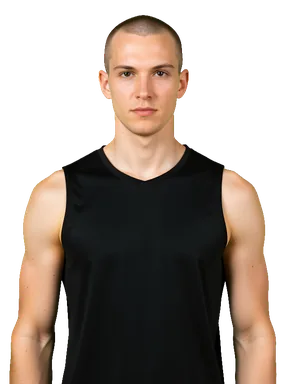
Heinz
Holl

Point guard

Felchen Konstanz

27 years · 182 cm · 80 kg · Germany · Squad number 99

At a glance

Overall 41–60
Potential 41–60 At his ceiling.
Ability and potential ⁠
What is Stars?

Stars

The grade your scouts give him out of five, for his ability now and for his potential. Half a star is ten rating points. Solid stars are what your scouts know; light blue stars are how far they might be out.

Nothing on its own. The stars are read from the same number or band printed beside them, so they never say more than it does.

Scout him. A narrower range turns light blue stars solid; your own players read exact.

See all terms

Fans Followed
Merchandise Best seller at the club
Habits None yet

Run a basketball club of your own

You pick the squad, work the market and set up the night's games. It is free to start, and you can be playing in minutes.

Where he is at home

⁠
What is Familiarity?

Familiarity

How at home a player is at a position, from 1 to 99. His own position is always 99. Anywhere else it is what he has earned: it starts where the distance from his own position puts it, rises with the minutes he plays there and with a training focus on it, and slips when he neither plays nor trains it.

The cost of standing there. Every attribute he has is cut by up to 18 percent at the lowest familiarity and by nothing at 99, so a man who is at home at two positions is two players. It also decides who your assistant can use at the spot, who counts as cover for it in the fit report, and which second position he is listed at.

Play him there, or choose the position as his training focus in the second slot of his plan. Both together are fastest. Keep playing him there afterwards: a position left idle fades by about a level a season.

See all terms

Natural PG Point guard Natural
Learning SG Shooting guard Learning
Unfamiliar SF Small forward Unfamiliar
Unfamiliar PF Power forward Unfamiliar
Unfamiliar C Centre Unfamiliar
Natural Accomplished Learning Unfamiliar

Where he stands

Scoring 14.3 a game 26 of 170
Rebounding 4.5 a game 31 of 170
6.5 assists a game 1 of 170
Game score 15.2 a game 10 of 170
What is game score?

One number for how much a player did in a game — scoring, rebounds, assists, steals and blocks counted up, with missed shots, turnovers and fouls taken off. It is a published basketball measure and not one this game invented. It changes nothing on the floor: every figure in it was printed on a match report that everybody could read, which is why it can be shown for any player at any club.

Among the 170 players with at least 11 games this season.

Last five

MIN · PTS · REB · AST
vs Festungsbauer Ingolstadt 26.9 13 5 6 +4
vs Käthchen Heilbronn 24.1 16 4 7 +25
vs Hüttenleute Saarbrücken 29.1 12 6 7 -2
vs Kurgäste Wiesbaden 29.6 22 3 8 -14
vs Wagnerianer Bayreuth 29.6 8 5 5 -7

⁠
Where he shoots

Where he shoots

The season of one man in the three zones: the share of his shots from each, and how well he scores there against the league.

It is a record of what he has done, counted from his box scores. The sentence names the zone he leans on, when his share there is a quarter above the league average.

Give him the role that suits it: a rim finisher is best with passers, a shooter with space. His shooting attributes are the cause, this is the effect.

See all terms

season 1
30 / 49 61% · rim 9 / 24 38% · mid 18 / 50 36% · three

Takes his shots from everywhere.

  • above the league's zone average
  • below it
RIM 30 / 49 · 61% 40% of his shots · league 62% · league 34% 60pts
MID 9 / 24 · 38% 20% of his shots · league 38% · league 22% 18pts
THREE 18 / 50 · 36% 41% of his shots · league 34% · league 43% 54pts

Attempts 49 + 24 + 50 123

Makes 30 + 9 + 18, 46% from the floor 57

⁠
Every shot this season

Every shot this season

One dot for each field-goal attempt he took in a league game this season, filled when it went in and hollow when it missed. How far from the ring is the match record; the side of the floor it came from is drawn for the picture, the same way the replay stages it, so every reader sees the same dot.

It is a record, not a rule. The zones and their makes are counts of the dots, and the line under them sets those counts beside his box score: they are equal when the dots cover every game.

Read where his makes cluster, then give him the role and the minutes that put his shots there. Filter by quarter to see whether he fades or finishes.

See all terms

season 1 · from day 16

41 of 41 shots shown

10 ft 20 ft Q1 1:33 · Heinz Holl · a 25-foot three · missed. Q1 0:39 · Heinz Holl · a 26-foot three · missed. Q2 6:36 · Heinz Holl · a 13-foot jumper · missed. Q2 5:09 · Heinz Holl · a 14-foot jumper · missed. Q2 4:42 · Heinz Holl · a 26-foot three · missed. Q3 4:39 · Heinz Holl · a 12-foot jumper · missed. Q3 2:13 · Heinz Holl · a 26-foot three · missed. Q1 8:37 · Heinz Holl · a 26-foot three · missed. Q1 1:19 · Heinz Holl · a 22-foot three · missed. Q2 3:06 · Heinz Holl · a 24-foot three · missed. Q3 5:58 · Heinz Holl · a 3-foot finish at the rim · missed. Q2 9:13 · Heinz Holl · a 3-foot finish at the rim, blocked by Liudas Mačiulis · missed. Q2 0:26 · Heinz Holl · a 2-foot finish at the rim · missed. Q3 3:31 · Heinz Holl · a 16-foot jumper · missed. Q2 5:18 · Heinz Holl · a 26-foot three · missed. Q3 6:51 · Heinz Holl · a 0-foot finish at the rim · missed. Q3 5:55 · Heinz Holl · a 26-foot three · missed. Q3 2:42 · Heinz Holl · a 17-foot jumper · missed. Q2 8:10 · Heinz Holl · a 3-foot finish at the rim, unassisted · made. Q2 7:06 · Heinz Holl · a 3-foot finish at the rim, unassisted · made. Q2 6:02 · Heinz Holl · a 16-foot jumper, assisted by Sascha Frei · made. Q2 3:00 · Heinz Holl · a 17-foot jumper, unassisted · made. Q2 0:54 · Heinz Holl · a 28-foot three, unassisted · made. Q3 7:33 · Heinz Holl · a 10-foot jumper, assisted by Nils Borković · made. Q3 5:20 · Heinz Holl · a 13-foot jumper, assisted by Sascha Frei · made. Q3 3:33 · Heinz Holl · a 18-foot jumper, unassisted · made. Q3 2:55 · Heinz Holl · a 15-foot jumper, unassisted · made. Q4 1:26 · Heinz Holl · a 2-foot finish at the rim, assisted by Moritz Bilir · made. Q1 9:14 · Heinz Holl · a 25-foot three, assisted by Emiliano Linares · made. Q2 4:47 · Heinz Holl · a 0-foot finish at the rim, assisted by Hartmut Hauser · made. Q2 3:06 · Heinz Holl · a 2-foot finish at the rim, assisted by Arnd Maduka · made. Q3 2:55 · Heinz Holl · a 0-foot finish at the rim, unassisted · made. Q4 8:31 · Heinz Holl · a 26-foot three, assisted by İrfan Budimirović · made. Q1 2:51 · Heinz Holl · a 25-foot three, assisted by Detlef Gürsoy · made. Q1 0:28 · Heinz Holl · a 3-foot finish at the rim, unassisted · made. Q2 8:38 · Heinz Holl · a 21-foot three, assisted by Emiliano Linares · made. Q2 6:13 · Heinz Holl · a 22-foot three, assisted by İrfan Budimirović · made. Q3 9:21 · Heinz Holl · a 28-foot three, assisted by Emiliano Linares · made. Q1 6:59 · Heinz Holl · a 3-foot finish at the rim, unassisted · made. Q1 2:28 · Heinz Holl · a 2-foot finish at the rim, unassisted · made. Q3 7:47 · Heinz Holl · a 3-foot finish at the rim, unassisted · made.
  • Made
  • Missed
  • bar = blocked
  • Distance is the match record. The side of the floor is drawn for the picture.

Shots by zone

Counts of the dots
RIM 10 / 14 71% · avg 2.1 ft 20pts
MID 6 / 11 55% · avg 14.6 ft 12pts
THREE 7 / 16 44% · avg 25.1 ft 21pts

The dots cover 23 of 41 shots, from day 16; his box score has 57 of 123. Earlier games have no shot record.

⁠
How good his shots are

Expected points

The points the league gets from shots like this one this season: the zone, the play, whether it came on the break and whether it came on a second chance. It does not know who was guarding or how far out he stood, because the game records neither. A club's expected points are the sum over its shots, and every figure opens to the kinds of shot it is made of.

It is a measure, not a rule: nothing in a match depends on it. It tells shot selection (how good the shots were) apart from shot-making (what the men did with them), so a bad night reads as bad luck or bad shots rather than just a bad night.

Take more of the shots the league scores most from, the rim and the open three, and fewer long pull-ups; the tactics page moves shots between them.

See all terms

Hot hand

His shots are worth a little less than the league's, and he makes them for more.

Shots are worth 1.00
League 1.01
Made for 1.29
How we counted it
Expected points: his 41 shots, kind by kind41.1
÷ 41 shots1.00
Points from the floor: 2 × 23 + 753
÷ 41 shots1.29

Expected points are measured against league rates through round 11.

His shots, kind by kind
Kind of shotShotsWorthPoints
Mid-range · Driveonly a few league shots like it, so the same play from the same zone: 33 % of 21240.652.6
Mid-range · Post-up · fast breakonly a few league shots like it, so the zone's rate: 37 % of 83210.730.7
Mid-range · Catch and shoot · fast break · second chanceonly a few league shots like it, so the zone's rate: 37 % of 83210.730.7
Mid-range · Pull-up40 % of 257 league shots30.802.4
Mid-range · Pull-up · second chanceonly a few league shots like it, so the same play from the same zone: 40 % of 36110.800.8
Mid-range · Pull-up · fast breakonly a few league shots like it, so the same play from the same zone: 40 % of 36110.800.8
Rim · Drive60 % of 542 league shots51.206.0
Rim · Drive · second chanceonly a few league shots like it, so the same play from the same zone: 59 % of 84411.191.2
Rim · Drive · fast breakonly a few league shots like it, so the same play from the same zone: 59 % of 84451.195.9
Rim · Post-uponly a few league shots like it, so the zone's rate: 59 % of 1 19611.181.2
Rim · Catch and shoot · second chanceonly a few league shots like it, so the zone's rate: 59 % of 1 19611.181.2
Rim · Catch and shoot · fast breakonly a few league shots like it, so the zone's rate: 59 % of 1 19611.181.2
Three · Catch and shoot34 % of 927 league shots61.036.1
Three · Catch and shoot · second chanceonly a few league shots like it, so the same play from the same zone: 35 % of 1 24731.063.2
Three · Catch and shoot · fast breakonly a few league shots like it, so the same play from the same zone: 35 % of 1 24731.063.2
Three · Pull-uponly a few league shots like it, so the same play from the same zone: 32 % of 24430.962.9
Three · Pull-up · second chanceonly a few league shots like it, so the same play from the same zone: 32 % of 24410.961.0
Total adds up411.0041.1
Hot hand

Well above what his shots are worth

+11.9

His shots are the kind that score 41.1 points. He has scored 53.

How we counted it
53 points from the floor − 41.1 expected+11.9
More statsThe kinds of shot he takes
DrivePost-upCatch and shootPull-up
He
37% 37% 22%
League
32% 43% 19%

Honours

Nothing yet. A title counts for him when he played at least half of his club's games that season; an award is given on the season's last days.

At a glance

Today

Form ⁠
What is Form?

Form

Whether he has been playing well lately, measured against what a player of his rating should be producing. Runs from −1 to +1, and starts at 0.

How he shoots and performs in the next match, alongside the team's form as a whole.

Nothing but playing well clears it. It answers a question nothing else in the model does — rating is what he can do, morale is how he feels, consistency is how widely he swings, and none of them remembers last week.

See all terms

0.4

What he can do

a range — what the game shows

Playmaking 49–68

Passing 61–80

Passing

Delivery, accuracy and timing.

How many assists he creates, and how often a pass of his is turned over.

Ball handling 41–60

Ball handling

Dribbling under pressure.

How often he loses the ball, and whether he can start a drive at all.

Basketball IQ 61–80

Basketball IQ

Reading the game — positioning, rotations, knowing what is about to happen.

Where he is standing on defence, whether the help arrives, and whether he sees the pass that is there.

Decision making 61–80

Decision making

Shot selection, and knowing when to pass.

The quality of the shots he chooses, and how often he turns the ball over.

Screening 21–40

Screening

Setting screens, and using them.

His teammates' shot quality and the screen assists he generates — not his own scoring. A great screener raises the whole lineup and appears in nobody's box score.

Scoring 41–60

Three-point 41–60

Three-point shooting

How well he shoots from beyond the arc.

How often his three-point attempts go in, and — through the lineup around him — how much room everyone else has to work in.

Mid-range 41–60

Mid-range shooting

Pull-ups and jumpers inside the arc.

How often his mid-range attempts go in.

Finishing 41–60

Finishing

Scoring at the rim, through contact.

How often he scores at the rim, how often he draws the foul with the basket, and how well he converts in transition.

Free throws 41–60

Free-throw shooting

How reliably he makes free throws.

How often his free throws go in — and nothing else, deliberately, so that a poor free-throw shooter can be punished by fouling him.

Off the ball 41–60

Movement off the ball

Cutting, relocating and getting open when he does not have the ball.

The quality of the shots he receives, and the chances he creates for himself without the ball in his hands.

Inside 26–45

Post play 21–40

Post play

Back-to-basket scoring, and passing out of the post.

How often the offence goes through him with his back to the basket, and how well it works when it does.

Offensive boards 41–60

Offensive rebounding

How hard and how well he goes after a shot his own team has missed, instead of retreating.

The share of your own missed shots he wins back.

Defensive boards 21–40

Defensive rebounding

How reliably he ends a possession by claiming the ball after a miss at his own basket.

The share of the opponent's missed shots he ends the possession on.

Shot blocking 21–40

Shot blocking

How often he gets a hand to what is put up near the rim, and how hard he makes it to shoot over him.

How many shots he blocks, and how many the opponent declines to take at the rim because he is standing there.

Defence 31–50

Perimeter 41–60

Perimeter defence

How well he stays in front of the man he is marking out on the wing and at the arc.

How good a look the man he is guarding gets from outside.

Interior 21–40

Interior defence

Guarding the paint and defending the post.

How good a look the opponent gets at the rim.

Steals 41–60

Stealing

Forcing live-ball turnovers.

How often he takes the ball off the opponent.

Aggression 21–40

Aggression

Defensive intensity and physicality.

How many fouls he commits, how often he goes for the steal, and how much pressure the opponent feels.

Athletic 50–69

Speed 61–80

Speed

Top-end speed in the open court.

How often your team gets out in transition, and how often it scores when it does.

Acceleration 41–60

Acceleration

First step and change of pace.

Whether his drives get past the man, and whether he recovers to close out.

Agility 61–80

Agility

Lateral quickness and change of direction.

Perimeter defence above all, and keeping a driver in front of him.

Leaping 41–60

Leaping

How high he gets off the floor.

Rebounding at both ends, blocked shots, and finishing at the rim.

Strength 41–60

Strength

Physical power and holding position.

Post play, finishing through contact, and rebounding.

Stamina 61–80

Stamina

How well he resists tiring during a game.

How many minutes he can play before his performance starts to drop, and how far it drops late in games.

Durability 41–60

Durability

How well he stands up to the wear of a season.

How quickly he recovers between matches, and how often he picks up a minor knock.

Mental 61–80

Composure 61–80

Composure

How he performs under pressure.

Shooting and free throws in the last three minutes of a close game, and turnovers late.

Consistency 61–80

Consistency

How reliable he is from one night to the next.

How widely his performance swings around his own average. It changes the spread rather than the level, so two players with the same season figures can be completely different to manage.

Work ethic 61–80

Work ethic

How hard he applies himself in training.

How much he gains from training, and whether he can push a little past his potential. Nothing in a match reads it at all.

Leadership 61–80

Leadership

How much he lifts the players around him.

Your squad's morale, and how steady the team is late in games. It works on his teammates and never on himself.

Determination 61–80

Determination

How hard he keeps working when things are going badly.

How the team behaves when it is trailing, and how much of a comeback it is capable of.

His deal

Contract ends End of season 3

What he is paid is between him and his club. To sign him, make his club an offer, or put a trade together.

Contract

Wage ⁠
What is Wage?

Wage

What the club pays him, as the deal stands today, quoted by the season where the world quotes so and by the week where it does not; it is paid in equal daily shares across every day of the season, offseason included. A contract with an annual rise moves this figure once a season, at rollover, so the number shown is always what is actually being paid rather than what was signed.

The club's wage bill every week, and through the salary rules how much room is left to sign anybody else.

It is fixed until the deal changes — a rise written into the contract, or a new contract altogether.

See all terms

10 757 dollars a week
Contract ends ⁠
What is Contract ends?

Contract ends

The season after which his deal runs out. Contracts end at the season's close: when that rollover comes he leaves the squad and enters the free-agent pool, owing the club nothing.

When he can walk away for free, and how urgent the question of his future is. A short deal is a cheap player about to become an expensive decision.

Once a deal is near its end you can offer him new terms, and an agreement takes effect the season after the current one runs out. Leave it and he reaches the free-agent pool, where anybody may sign him.

See all terms

End of season 3

Agent

Predrag Petrović Ruthless
Representation ⁠
What is Representation?

Representation

His agent's work. Some agents push hard on every deal and charge for it; others do not, and a player with no agent at all asks only for himself.

His weekly demand, and a one-off fee your club pays on signing.

Deal with the same agent fairly and repeatedly. They ask for less from a club they like doing business with, and take a smaller cut.

See all terms

Development

Nothing has moved yet.

Training changes attributes a little at a time, and every change is listed here when it happens.

Back to the squad